
Mining Video Production in BC: What to Film, When to Film It and What It Costs (2026)
What BC explorers and producers should put on video, how to time it around the field season and the conference calendar, the disclosure rules that apply, and what it costs in CAD.
Most of your shareholders will never stand on your property. They'll see it on a phone, between a news release and a chart. For a BC explorer or producer, video is the closest thing to a site visit most investors will ever get.
That matters more here than almost anywhere. More than 1,000 exploration and mining companies are headquartered in Vancouver, all chasing the same investors, the same conference traffic and the same geologists. This guide covers what to film at each stage of a project, when to shoot around BC's field season and conference calendar, the disclosure rules that apply to video, and what it costs. All numbers are in CAD.
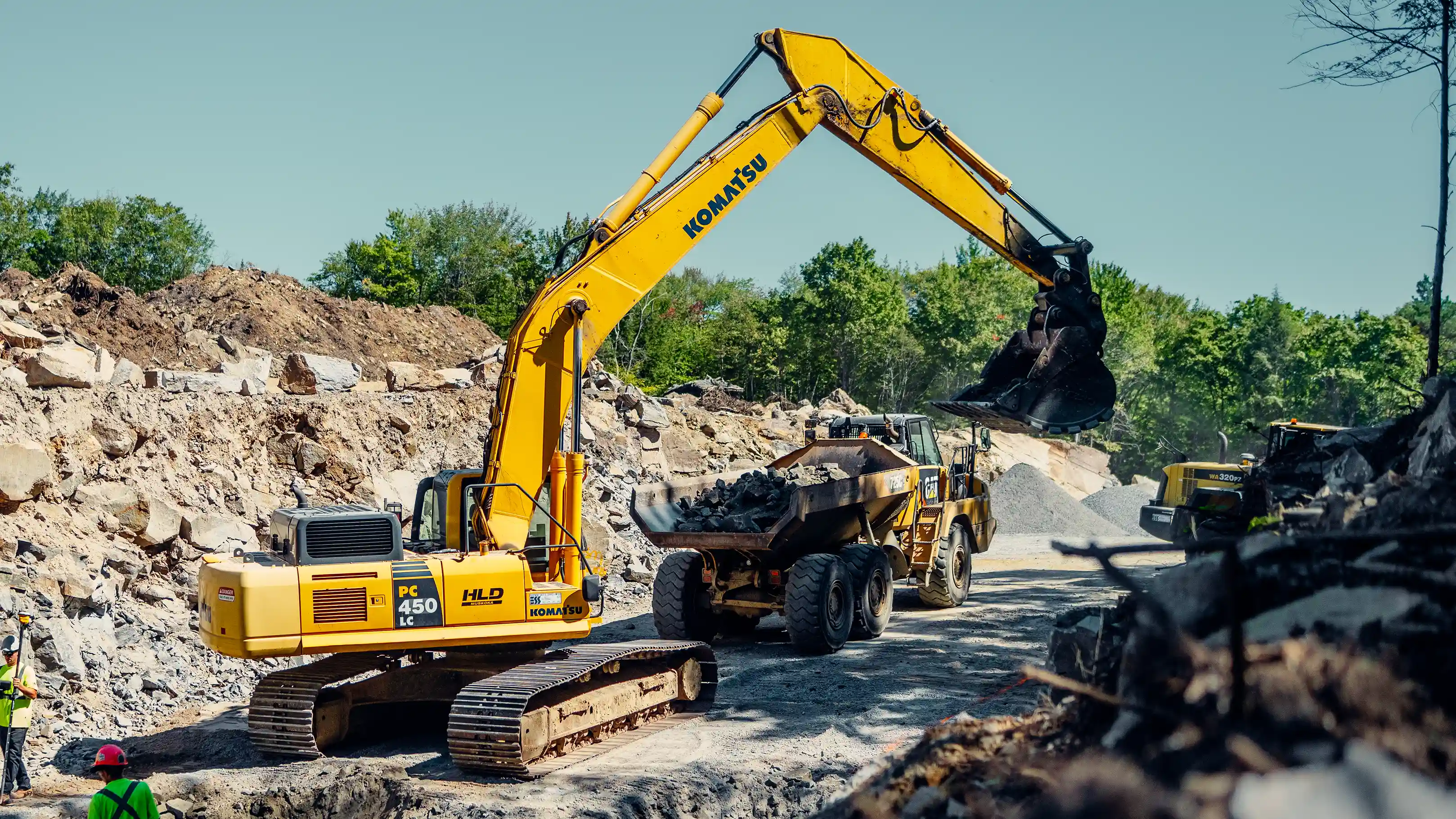
Filming around heavy equipment on an HLD Muskoka job site.
Who your video is for
A mining company has more audiences than most businesses, and each one needs something different.
- Investors. A 2 to 3 minute project film: where the project is, what the latest technical work shows, who's running it and what happens next. Then a 60 second version for conference screens and LinkedIn, and short CEO updates when there's news.
- Communities and First Nations. Films that show the project plainly, made with the Nation's input and permission. In the Golden Triangle, Tahltan Territory covers about 70% of the region, and the Nation takes an active role in how exploration happens there.
- Recruits. Camp, rotation, the work and the people. Good geologists and drillers have options. Show them why yours is the project to sign on with.
- Your own crews. For producers: safety, onboarding and training video that people watch to the end.
What to film at each stage
Exploration
Drills turning, core coming out of the hole, geologists logging it, the helicopter set-out, the camp and the ground itself. At this stage investors are buying into what might be there, so show the work. A project that looks busy reads as a project that's moving.
Development
Studies, permitting and engagement take years and mostly look like meetings. Film the site anyway, then carry the story with animated maps, infrastructure plans and interviews with the people doing the engineering and the community work.
Production
Operations, people, safety, environmental work and reclamation, and what the mine means to the towns around it. Producers need fewer investor teasers and more recruiting, community and training video.
When to film: the field season and the conference calendar
Northern BC sets the schedule. Much of the Golden Triangle can only be worked for a few months a year, and mid-summer is usually the best window for helicopter access to higher ground. If you want field footage, you shoot in season or you wait a year.
The conference calendar sets the deadline. AME Roundup 2027 runs January 25 to 28 at the Vancouver Convention Centre East, and drew more than 7,500 delegates in 2026. PDAC 2027 runs March 7 to 10 in Toronto, and had 32,155 participants in 2026.
So the work runs backwards from January: shoot in the field season, edit through the fall, and have the films live before Roundup, with a refresh for PDAC. If your field season is already over, the footage you have now is the footage you'll have at Roundup. Use the winter to plan next summer's shoot, and film what's still running: core shacks, offices and any year-round drill programs.
FREE TOOL
Get a price range for your exact project
Pick your region, project type and extras. See a realistic 2026 budget in CAD in under a minute.
Open the cost calculator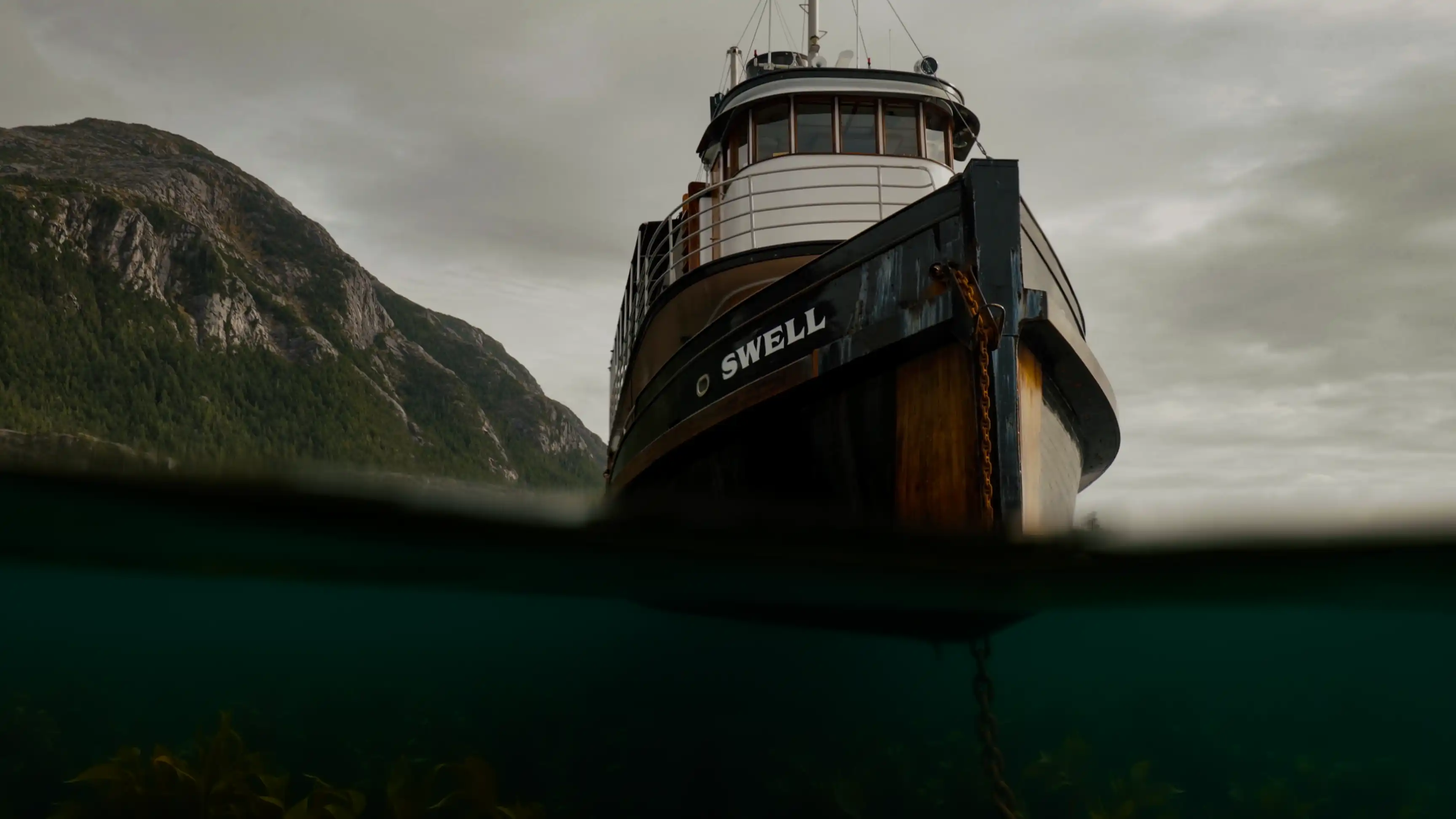
Aboard Swell on BC's north coast, filming for Maple Leaf Adventures.
Your video is disclosure
For a public mining company, a video is disclosure in the same way a news release is. NI 43-101 covers oral and written disclosure, and scientific and technical information about a material property has to be prepared by, supervised by or approved by a qualified person. That includes what your CEO says on camera and every number in the graphics.
How we handle it:
- The QP reviews the script and the on-screen numbers before the shoot, and the final cut before it goes live.
- The footage shows your project and nobody else's. If a shot isn't from your property, it doesn't go in.
- Forward-looking statements fall under separate rules in NI 51-102. Your counsel decides the cautionary wording, and we put it on the end card and in the description.
Filming on a BC mine or exploration site
BC's Health, Safety and Reclamation Code for Mines covers every stage from exploration to closure, so a film crew on site works inside your safety system like everyone else. Plan for:
- Orientation and PPE. Book the crew into site orientation before the shoot day, not on it.
- Helicopter seats and weight. A cinema camera package, drone and audio kit take seats and weight on flights your crews also need. Put them in the flight plan early.
- Drones. Any drone 250 grams or heavier has to be registered with Transport Canada and flown by a certified pilot. Around active helicopter traffic, the drone flies when the helicopter pilots say so.
- Weather days. Fog and low cloud ground helicopters. Budget at least one weather day for any fly-in shoot.
What it costs
A mining investor or site film runs $12,000 to $40,000+ CAD, the same range in our corporate video cost guide. Where you land depends on access. A site you can drive to sits at the bottom. A fly-in camp with helicopter time, camp nights and weather days sits at the top. Travel days are quoted separately.
If you have news every quarter, film every quarter. Four shoots a year tied to drilling, results and conference season keep your story current and cost less per video than four separate productions.
Frequently asked questions
How much does a mining company video cost in BC?
An investor or site film typically runs $12,000 to $40,000+ CAD. Remote, fly-in sites sit at the top of the range because of helicopter time, camp nights and weather days.
Does a mining video need QP sign-off?
If it includes scientific or technical information about a material property, NI 43-101 applies, so have your qualified person review it. Check the details with your counsel.
When should we film?
During your field season, planned before it starts. For new field footage at AME Roundup in January, the shoot has to happen the summer before.
Can one shoot cover investor, recruiting and community videos?
Yes, if it's planned that way. One site visit with the right interview list and shot list can feed all three.
Can you film at fly-in and remote sites?
Yes. We film at remote locations and work through your safety orientation and PPE requirements. Our Great Bear Rainforest film for Maple Leaf Adventures was shot over a week aboard a boat on BC's north coast and passed 2M views on Facebook. Here's how that shoot went.
Planning next season's footage
If you're mapping out next year's field program, put video in the plan now. Book a 15-minute call and we'll tell you what to film, when, and what it will cost.
Need Video? Lets get started.
15-min discovery call. No deck, no pitch. Just a real conversation about what you are building.
Book a Discovery Call