Wrong Lens, Right Bear: Filming the Great Bear Rainforest
A week aboard Swell on BC's north coast, filming for Maple Leaf Adventures. Twenty humpbacks, a bear named Big Nick, and the best footage came from the wrong lens.
In October 2021, Brodie and Jacob spent a week aboard Swell, a classic tugboat Maple Leaf Adventures runs through the Great Bear Rainforest on BC's north coast. The job was to come home with a film that made people want to book the trip. I kept a journal most nights. This is what's in it, cleaned up a bit.
The Great Bear has no roads. You get around by boat, you go ashore by zodiac, and the schedule belongs to the tide and the animals. We had a shot list. The bears did not read it.
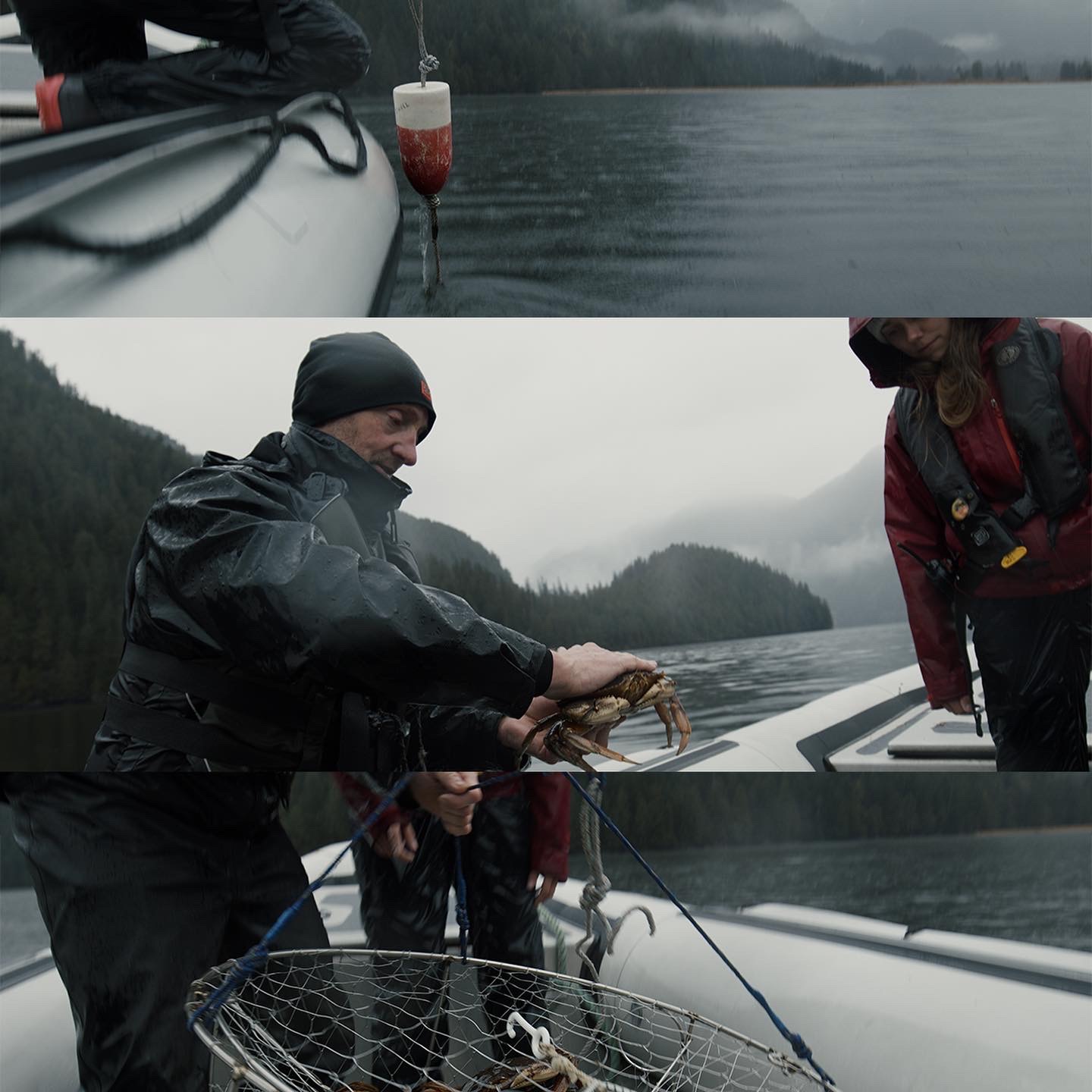
Simon Ager bringing up crab traps
Terrace to Kitimat
We flew into Terrace and had a beer at the airport restaurant, mostly because it was the last wifi we'd see all week and we still had edits to send. Then a cab to the marina in Kitimat, in the rain.
Our cabin was about three feet wide and six feet long, with two bunks. It was all the room we needed. Dinner was three courses in the salon with a boat full of strangers from across Canada and the US, each there for their own reasons, and more than a couple of glasses of wine. We finished the night trading stories.
Whale Channel
Day two started in Eagle Bay with the rain finally letting up. On the way to shore, our zodiac driver took us straight through the stream coming out of Swell's bilge pump, so everyone started the morning with a wet back. The beach was quiet. No wildlife, so after an hour we went back to the boat.
The plan was to run Whale Channel looking for humpbacks. We found the first one before we got there. The captain cut the engine, we drifted to a stop and everyone went up top. Five minutes later it surfaced and exhaled. Then another came up, then another. Over about an hour and a half we counted roughly 20 breaches.
We filmed them surfacing, blowing and diving. At one point I was on a whale that showed its tail and went deep, which usually means a few minutes before you see it again, so I swung over to another group. Thirty seconds later the first one breached, its whole body clear of the water. I didn't get the shot. I watched it instead, which in hindsight was the better use of those few seconds.
We stayed with the whales so long we had to anchor in Home Bay, an hour short of where we'd planned to be. At dinner the conversation turned to pirates. Brodie has met an actual one, or at least a man called Pigeon who sails the waters off Vancouver Island and fits the description. He was mid-story when a light appeared off the starboard side, close enough that the captain got up to check. It was a fishing boat two kilometres away. Hot tub, early night.
The outer coast
The anchor came up at 6:30 the next morning and woke everyone on board except me. I sleep deep. By the time I opened the cabin door we were moving through thick fog and light rain, just before first light.
By 8:45 we were in the zodiacs off a small island covered in seals. Brodie, Simon from the crew and I had a boat to ourselves. Brodie had his underwater housing ready to go. The seals were not interested. On the way back a humpback blew somewhere in the distance, loud enough to turn every head in the boat.
The next stop meant rounding the end of Whale Channel into the almost open Pacific. Swell rolled the whole way and about half the guests got seasick. On the other side were white sand beaches with surf breaking on them, and the landing filled everyone's rubber boots.
Ashore it looked like Jurassic Park. I remember thinking it was the wildest place I'd been without leaving Canada. An hour in, it started pouring, and the tide had come up further than any of us noticed. Simon ran the zodiac around to a better spot and we scrambled in.
Back on Swell, Brodie decided to swan dive off the bow. There were lion's mane jellyfish in the water around the boat. He didn't care. I put the drone up and got the shot.
Heading north toward Gribbell Island, the sky cleared completely. Brodie and I got in the hot tub, which we more or less had to ourselves all week, and watched four bald eagles meet over the water and circle off the stern. My camera was downstairs. Some things you're allowed to just watch.
That evening I watched the sun go down from the back deck, on the couch next to a 77-year-old man. We talked for a long time about life and how it looks from the far end of a full one.
Gribbell Island
We were up before first light for the thirty-minute run to Gribbell Island, where we met Marvin, the local Indigenous guide who'd be with us all day. Marvin grew up on these islands and knows every bear by name. He also turned out to be one of the people featured in the IMAX film Great Bear Rainforest. Gribbell is bear country even by Great Bear standards, and you feel it the second you step off the zodiac.
The hike to the viewing spot climbs through thick rainforest on ground so boggy every step makes its own sound. Then you sit. We knew we'd be there about eight hours. For the first few, nothing happened. Someone opened the food bins, we had cookies and coffee, and we started wondering out loud whether this was going to be one of those days.
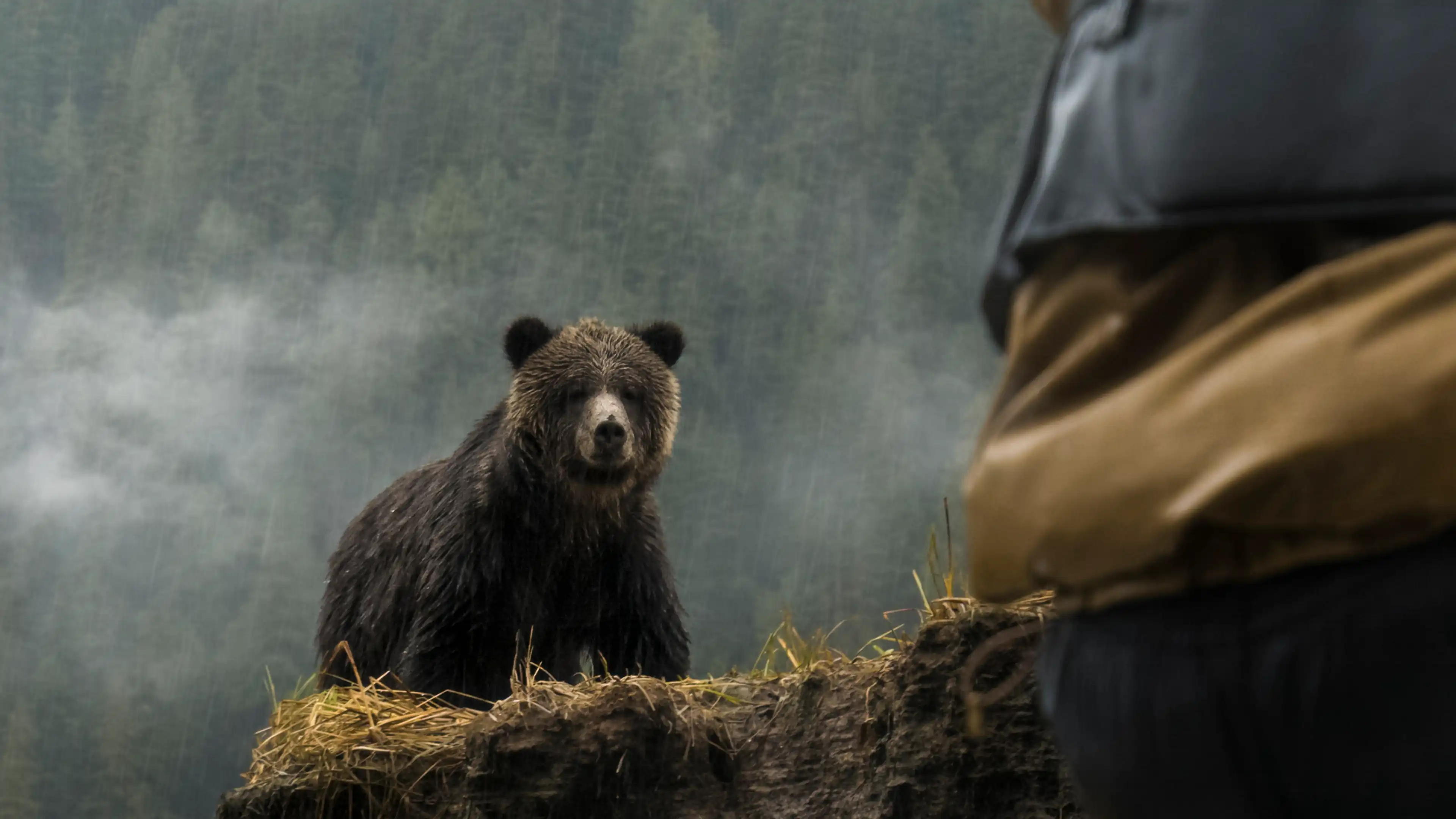
Then a big black bear the guides call Big Nick came slowly around the corner. Nobody saw him coming until he was about ten feet from our naturalist. He saw us, turned around and crossed the river to get out of our way, then spent the next half hour fishing salmon out of it, pinning them and taking them apart.
Later we watched two bears fight, which settles any question about who's in charge out there. What stuck with me was the other side of it. An animal that strong will walk within ten feet of a group of people, look you over and go back to eating. You're not a threat. You're just there.
The day's count: three bears, a pine marten, a lot of birds and a long conversation with Marvin. The tide was high by the time we got back to the beach, so we stood on what was left of it and waited for the zodiac.
FREE TOOL
Get a price range for your exact project
Pick your region, project type and extras. See a realistic 2026 budget in CAD in under a minute.
Open the cost calculator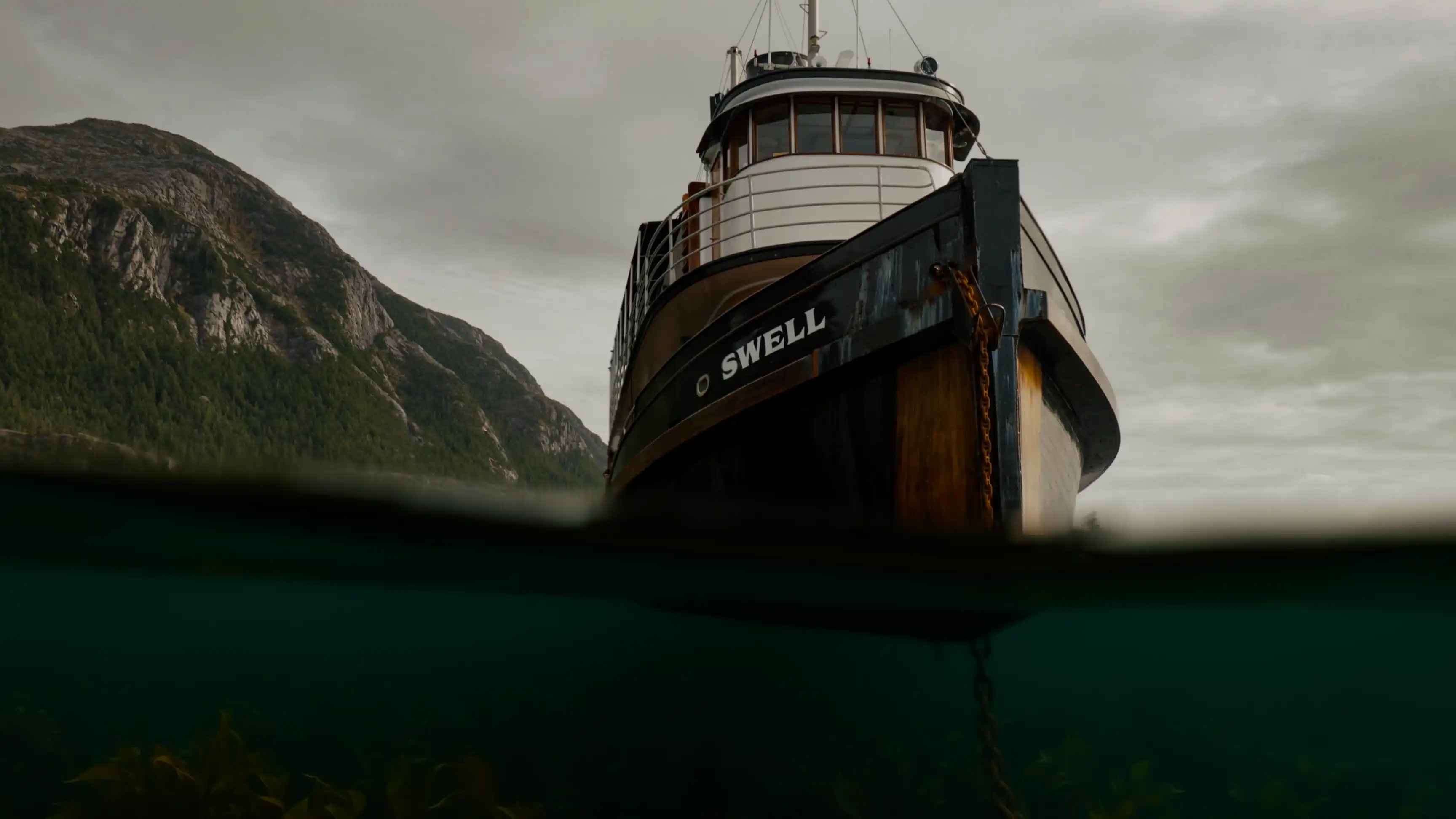
The Swell is a historic 88-foot Canadian tugboat built in 1912 by Arthur Moscrop for the Victoria Tug Company—the very same year the RMS Titanic set sail. Originally operating as a coal-fired steam vessel, it spent 92 years transporting vital cargo like wood and machinery along the rugged coast of British Columbia. Over its near-century as a commercial workboat, it underwent major transformations, including converting to a diesel engine in 1954, serving as a private yacht, and appearing on the classic Canadian TV show The Beachcombers in 1974. Following extensive multi-million dollar refits, this iconic wooden-hulled vessel was beautifully repurposed by Maple Leaf Adventures as a boutique, eco-friendly expedition cruise ship. Today, it accommodates up to 12 guests in private cabins, charting passenger excursions through the remote wilderness, fjords, and wildlife habitats of British Columbia and Alaska's Inside Passage
Khutze Inlet
In Khutze I woke up to water dripping on my face. Swell's engine had started and shaken the condensation off the skylight above my bunk. It was close to freezing and I was still cold from the day before, so that was a great start. Breakfast fixed it: eggs Benedict with sausage and greens, my favourite of the trip.
The plan was grizzlies in the estuary, all day, in the rain. We spotted the first one five minutes out, digging roots on the shoreline. He was shy and left. There were bald eagles in nearly every tree. We ran aground a few times at low tide and paddled ourselves off. On the north side we found a mother and two cubs in the bushes, and they were gone before anyone got anything usable.
Three hours in, my rain pants had quit and my base layer was soaked. The group headed back to the boat to warm up.
Brodie and I stayed out with Simon to pull the crab traps, mostly for the footage. My hands barely worked the camera. We pulled seven crab, three of them keepers. Then Simon pointed back toward the estuary. Bear. The four of us in the boat looked at each other, cold and wet, and nobody said no.
Khutze had given us three short encounters so far and nothing we could build a film around. This was the last chance before Swell moved on. It was also when Brodie and I realized we only had 16-35mm lenses with us. Those are wide angles. Unless you're about ten feet from a bear, they're the wrong tool.
We eased in. The bear didn't leave. We kept going and he kept not leaving, until we were close enough that the wide lenses were exactly right. For about thirty minutes he ate a salmon and dug for roots while we filmed. We came back with more than we'd hoped for.
Being that close to a grizzly while he eats is hard to explain. You can see his eyes. He isn't the killing machine he gets made out to be. What it felt like, mostly, was mutual respect.
We didn't make a big deal of it at dinner. I got in the hot tub to write and thaw out my hands, and Simon came around the corner to tell us the crab had to go back in. Crab season had closed the day before. We let them go. If we'd known that before we went out, we never would have pulled the traps, and we never would have found that bear.
The hot springs
Day seven was a transit day, four hours on the boat. By then, day one felt like a month ago. Brodie and I spent most of the run in the hot tub with a cold beer. When we anchored, everyone changed for the hot springs. I'd forgotten swim trunks at home, so a pair of underwear got promoted for the week.
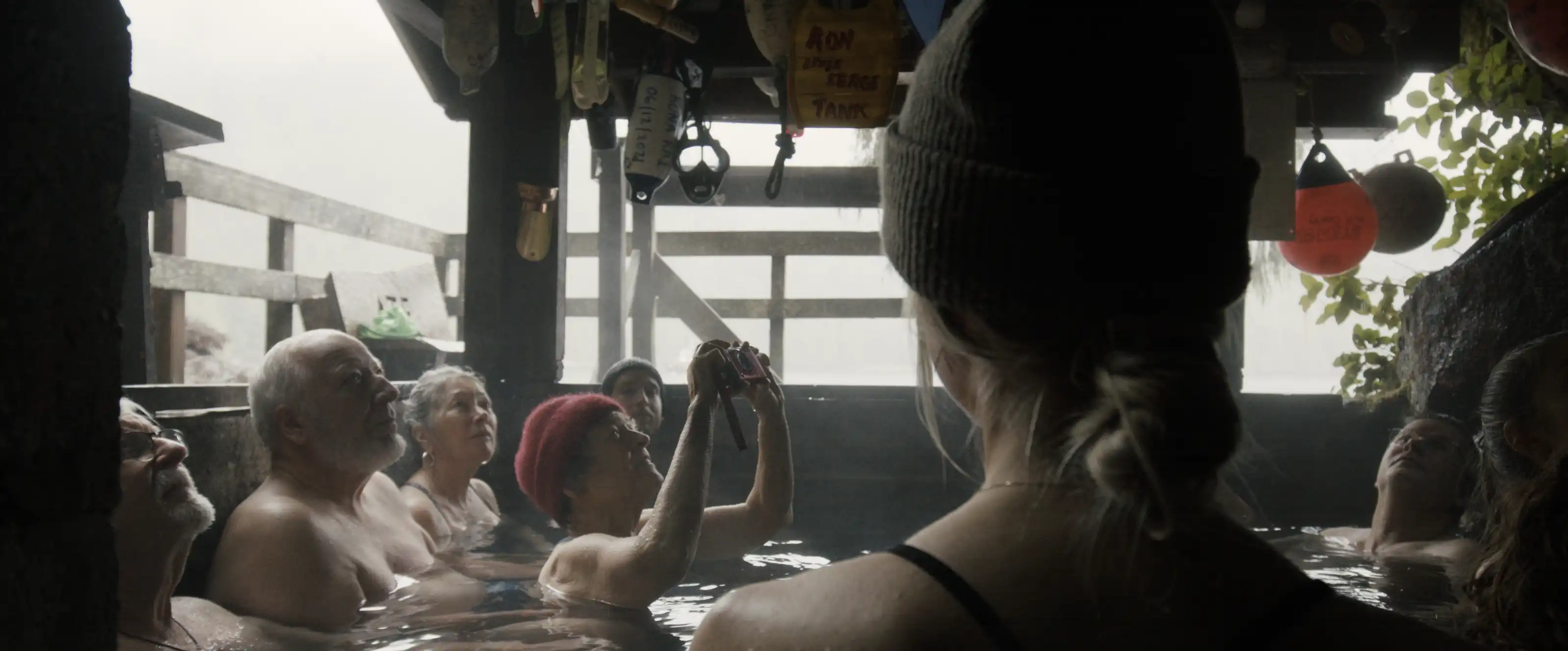
It was a short zodiac ride and a short walk in cold rain, everyone in one layer and a rain shell. The springs have two pools, one a little hotter than the other, both around 100°F. Hanging from the roof of the shelter are hundreds of buoys, lures and odds and ends, all signed by people who've soaked there. Some go back to the 1980s.
We stayed about two hours. On the way out I wanted to leave something like everyone else had, but I didn't have a lure or anything nautical. So I wrapped my toque around a ceiling beam with the Living the Dream logo facing out. One day I'd like to go back and see if it's still up there.
The film
Maple Leaf Adventures released the film in April 2022. It has passed 2 million views on their Facebook page alone, and pulled a big audience on YouTube on top of that. For a place most people will never see in person, that's the whole job: get it in front of people and make them want to go.
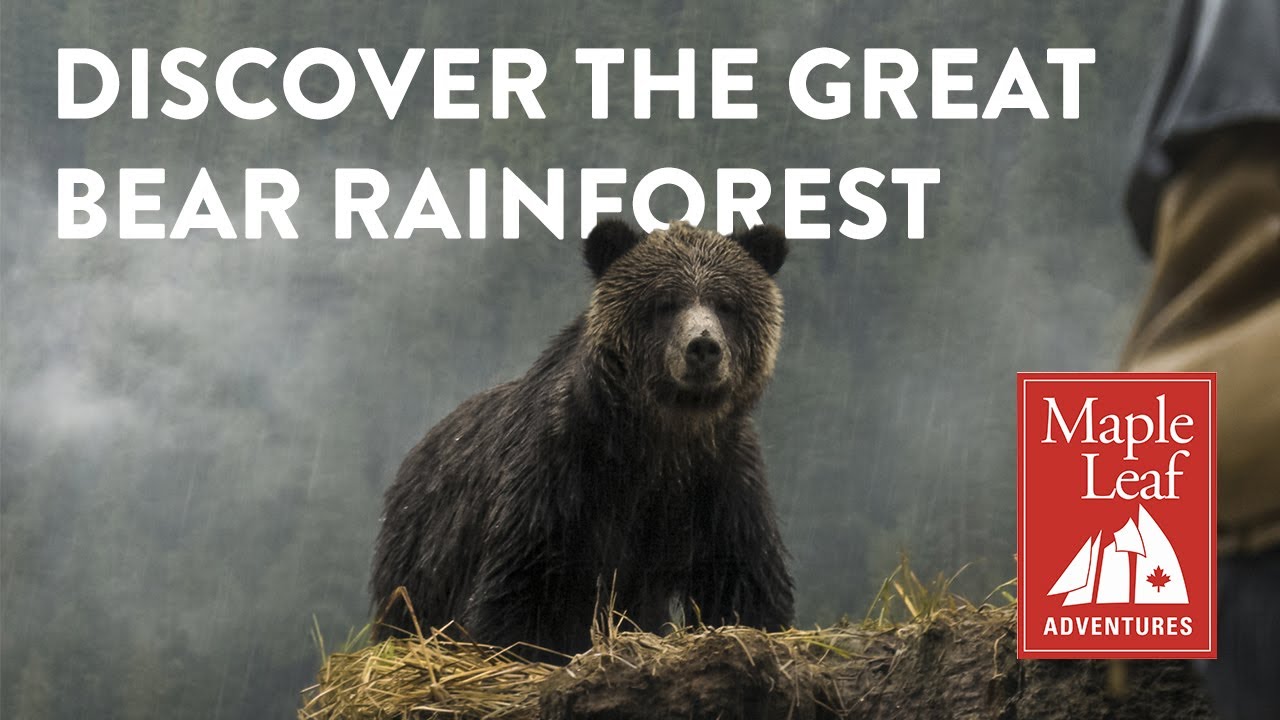
Photography and video by Jacob DeGrace and Brodie DeGrace of Coastline Films, aboard Swell with Maple Leaf Adventures, October 2021.
If you run trips like this and want people to feel them before they book, it's the work we like most. Tell us about yours.
What Maple Leaf said


It's been a pleasure seeing our wild west coast through the lens of Coastline Films! The team's talent, technical skill and amenability to feedback made working together a breeze. The result is a beautiful piece of storytelling that we can't wait to share with the world.
Need Video? Lets get started.
30-min discovery call. No deck, no pitch. Just a real conversation about what you are building.
Book a Discovery Call